Category: Paranormal Reader Stories

  • Unexplained Voice Caught (EVP) at Union Cemetery, 16422

    Other mystery Heard: a voice on each recording, words unclear  ·  Where: Union Cemetery, ZIP code 16422 (Harmonsburg, PA area)  ·  Recorded: dates not known  ·  Submitted by: Paranormal Department

    Status: Unverified. We do not know what made these sounds, and we are not claiming they are paranormal. Recorded by Paranormal Department.

    About the pin: placed at the middle of the ZIP code area only, not at the cemetery gate, a street or anyone’s home. All 16 recordings share this one pin.

    Sixteen short recordings were made at Union Cemetery in the 16422 ZIP code area of Pennsylvania, and a voice can be heard on each one. The words can’t be made out. Each clip has its own player below, so press play and listen for yourself. Headphones help. The clips run from a few seconds to under twenty seconds each.

    Clip 1 of 16 · 0:06 · unverified. Download the MP3.
    Clip 2 of 16 · 0:05 · unverified. Download the MP3.
    Clip 3 of 16 · 0:05 · unverified. Download the MP3.
    Clip 4 of 16 · 0:04 · unverified. Download the MP3.
    Clip 5 of 16 · 0:04 · unverified. Download the MP3.
    Clip 6 of 16 · 0:14 · unverified. Download the MP3.
    Clip 7 of 16 · 0:13 · unverified. Download the MP3.
    Clip 8 of 16 · 0:05 · unverified. Download the MP3.
    Clip 9 of 16 · 0:12 · unverified. Download the MP3.
    Clip 10 of 16 · 0:13 · unverified. Download the MP3.
    Clip 11 of 16 · 0:10 · unverified. Download the MP3.
    Clip 12 of 16 · 0:07 · unverified. Download the MP3.
    Clip 13 of 16 · 0:06 · unverified. Download the MP3.
    Clip 14 of 16 · 0:08 · unverified. Download the MP3.
    Clip 15 of 16 · 0:19 · unverified. Download the MP3.
    Clip 16 of 16 · 0:08 · unverified. Download the MP3.

    We have no transcripts and we are not going to guess at the words. What people hear in clips like these varies, and your brain is very good at finding speech in noise. If you hear something specific, tell us in a verification note below, and say which clip, what you think it is and why.

    What we know and what we don’t

    • Place: Union Cemetery, ZIP code 16422. We are not giving a street address, and the map pin is only at the middle of the ZIP code area.
    • Date: recording dates not known. Recorded by Paranormal Department; posted October 2026.
    • The files: we do not know what processing, if any, was applied to the clips before they were posted. For this web copy we only raised the volume slightly. Nothing was filtered, cleaned up or enhanced.
    • Ordinary explanations still to rule out: wind, distant people or traffic, a radio or phone, an animal, microphone or recorder noise, and audio processing.
    For entertainment and curiosity only. A recording is a claim, not proof of anything. Please respect Union Cemetery and any cemetery: do not visit after hours, do not disturb graves or private property, and never trespass to get a recording.

    📍 See these recordings on the map. Were you there, or can you explain any of them? Add a verification note below — notes are read by a person before they appear.
  • The Wendigo — Northern Woods (Algonquian folklore)

    Cryptid Historical case When: Centuries-old tradition; no single date  ·  Where: Great Lakes and northern forests of the U.S. and Canada

    Status: Folklore — a spirit from Algonquian tradition, not a reported animal; the pin marks the region only.

    About the pin: Folklore region, not a place of any one sighting; pinned in the northern Minnesota woods.

    The wendigo is a mythological creature or evil spirit from Algonquian folklore of the northern woods of the United States and Canada. It is often described as a malevolent spirit, sometimes shown as a giant humanoid with a heart of ice, whose approach may be signalled by a foul smell or a sudden unseasonable cold.

    In the traditional stories it is tied to insatiable hunger, and to the dangers of starvation and cannibalism in long winters. It is used in horror fiction and social commentary today. In some First Nations communities, greed and destruction of the environment are described as symptoms of wendigo psychosis.

    This entry is on the map because people often ask about it, but it is unlike the others: it belongs to living Indigenous traditions and should be treated with respect, not as a monster to be hunted. “Wendigo psychosis” is also a disputed, culture-bound term used by psychiatrists in the past.

    Sources: Wikipedia: Wendigo · Encyclopædia Britannica: wendigo

    Historical case. This is a summary written by the Department from the published sources listed above, in our own words. It is a historical case added to the map for context, not a reader submission. Reports are claims or findings as described in those sources; they are not proof of anything, and where an official or widely accepted explanation exists we say so. For entertainment and curiosity only. Spotted a mistake, or know more? Add a verification note below, or email paranormaldepartment1@gmail.com.

    📍 See this case on the map. Were you there, or can you explain it? Add a verification note below — notes are read by a person before they appear.
  • The Jersey Devil — Pine Barrens, NJ (1735, 1909)

    The Jersey Devil — Pine Barrens, NJ (1735, 1909)

    Cryptid Historical case When: Legend dated 1735; major wave of reports January 16–23, 1909  ·  Where: Pine Barrens, southern New Jersey

    Status: Explained — folklore plus a 1909 newspaper-driven panic that researchers call mass hysteria.

    About the pin: The legend is tied to Leeds Point; reports covered all of South Jersey.

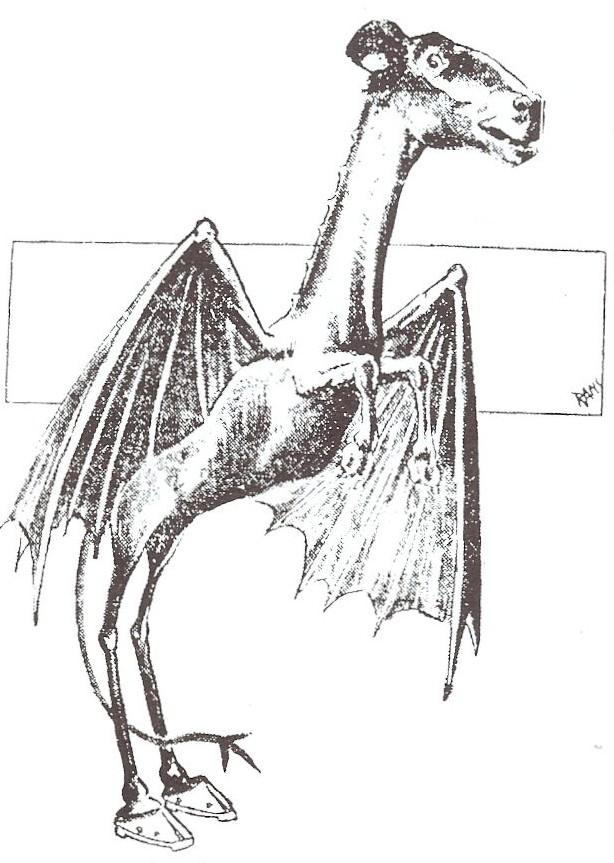
    A 1909 newspaper illustration of the Jersey Devil, a winged creature with a horse-like head
    Jersey Devil illustration from a Philadelphia newspaper, 1909.
    Credit: Unknown artist, Philadelphia newspaper (1909) · Licence: Public domain (published 1909) · Source

    The Jersey Devil, also called the Leeds Devil, is a legendary creature said to live in the New Jersey Pine Barrens. It is usually described as a flying biped with hooves, a horse- or goat-like head, bat-like wings and a forked tail.

    According to one version of the legend, in 1735 a woman named Leeds, already the mother of twelve children, cursed her thirteenth with the words “let the child be the devil.” The baby is said to have grown wings, claws and a tail, and flown up the chimney into the pines. Other versions put the story in other places and decades. The name “Jersey Devil” does not show up in print until the 20th century.

    The big flap came during the week of January 16–23, 1909, when newspapers published hundreds of claimed encounters across South Jersey and the Philadelphia area, including claims that it attacked a trolley car. The image of the batlike creature with a horse's head became standard from these stories. Researchers cite the 1909 panic as a classic example of mass hysteria spreading from a regional legend.

    Sources: Wikipedia: Jersey Devil

    Historical case. This is a summary written by the Department from the published sources listed above, in our own words. It is a historical case added to the map for context, not a reader submission. Reports are claims or findings as described in those sources; they are not proof of anything, and where an official or widely accepted explanation exists we say so. For entertainment and curiosity only. Spotted a mistake, or know more? Add a verification note below, or email paranormaldepartment1@gmail.com.

    📍 See this case on the map. Were you there, or can you explain it? Add a verification note below — notes are read by a person before they appear.

  • The Beast of Gévaudan — Lozère, France (1764–67)

    The Beast of Gévaudan — Lozère, France (1764–67)

    Cryptid Historical case When: June 30, 1764 to June 19, 1767  ·  Where: Gévaudan, south-central France

    Status: Explained (probably) — historians generally think a wolf or several wolves, or other known animals, were responsible, though debate continues.

    About the pin: Pinned near Langogne, the area of the first attacks; the attacks covered a large region.

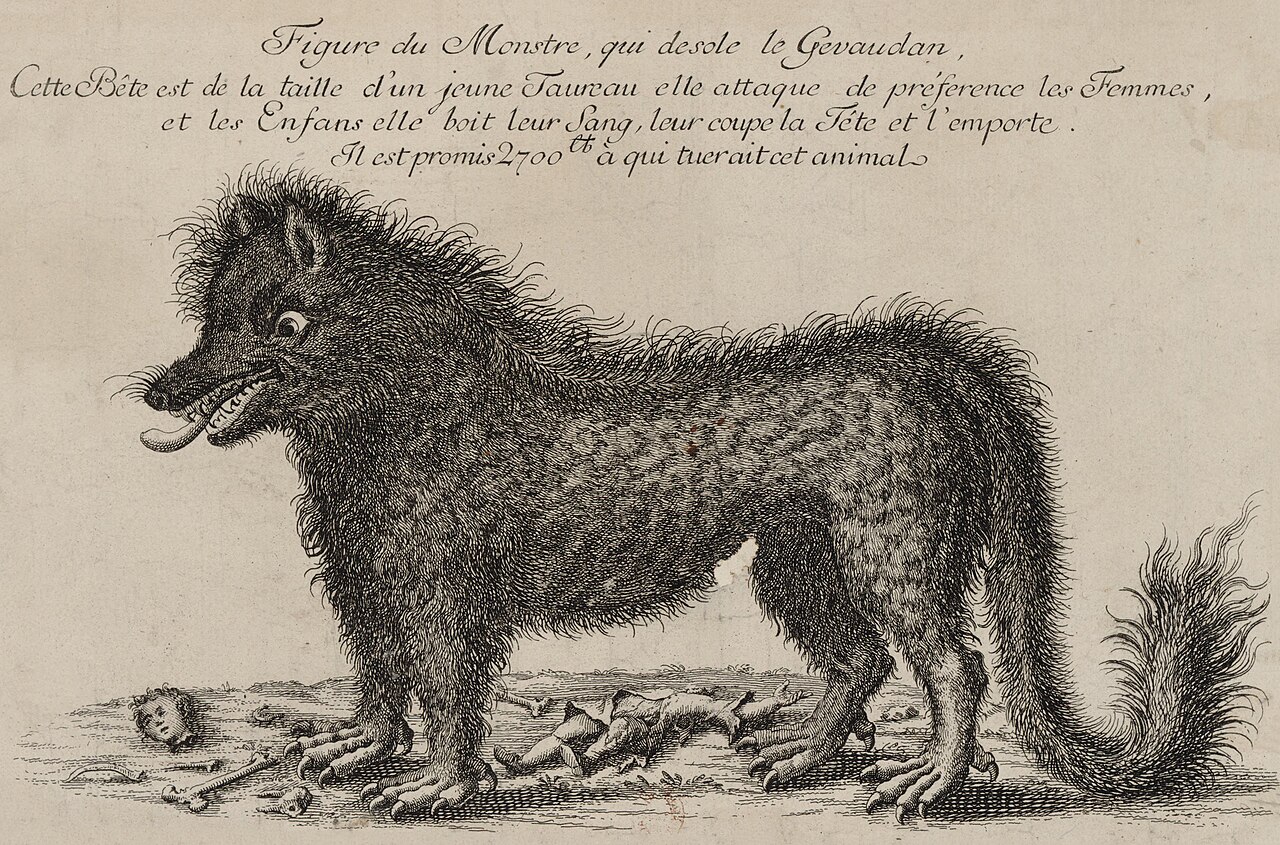
    An 18th-century engraving of the Beast of Gévaudan, a shaggy wolf-like animal with a long tail
    “Figure du Monstre qui désole le Gévaudan”, an engraving from 1764.
    Credit: Unknown engraver (1764), French print · Licence: Public domain (18th-century work) · Source

    Between 30 June 1764 and 19 June 1767 an animal or animals terrorised the former province of Gévaudan in the Margeride Mountains of south-central France. The number of victims depends on the source: a 1987 study estimated 210 attacks with 113 deaths and 49 injuries, while other sources say 60 to 100 adults and children were killed.

    The first recorded attack was in early summer 1764, when a young woman tending cattle near Langogne saw a beast “like a wolf, yet not a wolf” and was saved by the bulls in her herd. The first official victim, 14-year-old Jeanne Boulet, was killed on 30 June near Les Hubacs. The attacks usually targeted lone people, often children and women, tending livestock.

    The story reached King Louis XV, who decreed that the French state would help find and kill the beast. Several animals were reported killed during the affair. Engravings of the time, like the one shown here, helped the legend spread across Europe, and it is still debated whether the attacker was a wolf or something else.

    Sources: Wikipedia: Beast of Gévaudan

    Historical case. This is a summary written by the Department from the published sources listed above, in our own words. It is a historical case added to the map for context, not a reader submission. Reports are claims or findings as described in those sources; they are not proof of anything, and where an official or widely accepted explanation exists we say so. For entertainment and curiosity only. Spotted a mistake, or know more? Add a verification note below, or email paranormaldepartment1@gmail.com.

    📍 See this case on the map. Were you there, or can you explain it? Add a verification note below — notes are read by a person before they appear.
  • The Myrtles Plantation — St. Francisville, LA (1796)

    The Myrtles Plantation — St. Francisville, LA (1796)

    Ghost / Haunting Historical case When: Built 1796; “haunted” reputation since the 1940s–1960s  ·  Where: St. Francisville, Louisiana

    Status: Unverified — the ghost stories were promoted for tourism, and a scholar argues they reflect real violence against enslaved people.

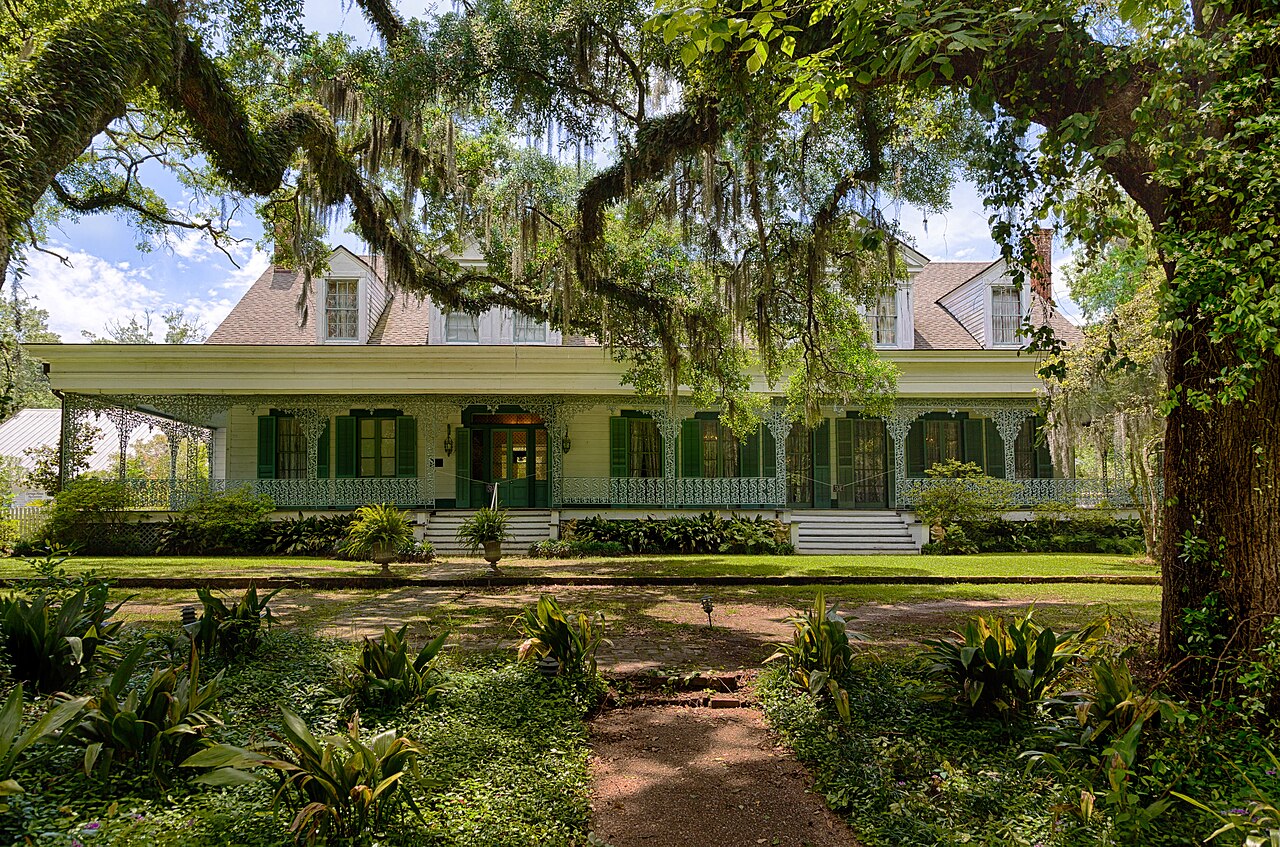
    The Myrtles Plantation house, a long low porch building under big oak trees
    The Myrtles Plantation house, St. Francisville, Louisiana.
    Credit: Bogdan Oporowski / Wikimedia Commons · Licence: CC BY-SA 3.0 · Source

    The Myrtles Plantation was built in 1796 by General David Bradford. It was worked by enslaved people, and the house has changed hands many times since. It has been on the National Register of Historic Places since 1978 and now operates as an inn with tours.

    The house was already called “haunted” in a 1948 book of Mississippi ghost stories, and a 1960 Louisiana state publication said it was reputed to have at least one ghost. It later became heavily promoted as “one of America's most haunted houses.” The best-known tales, about women called Chloe and Cleo, are mostly told from the point of view of the owners. The scholar Tiya Miles has written that these stories are really about violence against Black women.

    That is worth keeping in mind. The ghost stories are folklore built on a real history of slavery, and the historical record behind them is thin.

    Sources: Wikipedia: The Myrtles Plantation

    Historical case. This is a summary written by the Department from the published sources listed above, in our own words. It is a historical case added to the map for context, not a reader submission. Reports are claims or findings as described in those sources; they are not proof of anything, and where an official or widely accepted explanation exists we say so. For entertainment and curiosity only. Spotted a mistake, or know more? Add a verification note below, or email paranormaldepartment1@gmail.com.

    📍 See this case on the map. Were you there, or can you explain it? Add a verification note below — notes are read by a person before they appear.

  • The Tower of London — London, England (1066–present)

    The Tower of London — London, England (1066–present)

    Ghost / Haunting Historical case When: Founded 1066; ghost reports recorded from 1816–17  ·  Where: London, United Kingdom

    Status: Unverified — centuries of stories, with the earliest named witnesses from the 1810s; none is backed by independent evidence.

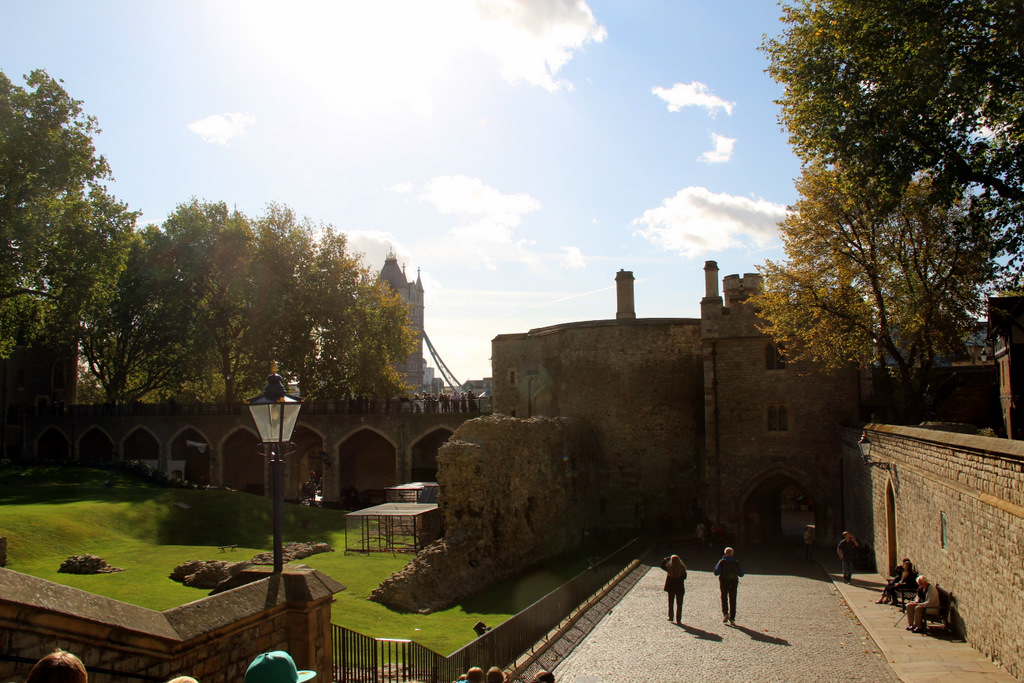
    The Bloody Tower and a cobbled path inside the Tower of London on a sunny day
    The Bloody Tower, Tower of London.
    Credit: Christine Matthews / Wikimedia Commons (geograph.org.uk) · Licence: CC BY-SA 2.0 · Source

    The Tower of London has been a fortress, palace and prison since it was founded after the Norman Conquest in 1066. Among those held and executed there was Anne Boleyn, beheaded in 1536, and the “Princes in the Tower” disappeared there in the 1480s.

    The Tower has a long list of reported ghosts. Anne Boleyn is said to haunt the Church of St Peter ad Vincula, where she is buried. In January 1816 a sentry outside the Jewel House said he saw a bear-like apparition and reportedly died of fright days later. In October 1817 the Keeper of the Crown Jewels, Edmund Lenthal Swifte, claimed to see a glowing tube-shaped shape floating over his wife's shoulder.

    These are some of the earliest named ghost reports in this collection, but they are accounts people gave, not tested evidence. The Tower is a working heritage site run by Historic Royal Palaces.

    Sources: Wikipedia: Tower of London

    Historical case. This is a summary written by the Department from the published sources listed above, in our own words. It is a historical case added to the map for context, not a reader submission. Reports are claims or findings as described in those sources; they are not proof of anything, and where an official or widely accepted explanation exists we say so. For entertainment and curiosity only. Spotted a mistake, or know more? Add a verification note below, or email paranormaldepartment1@gmail.com.

    📍 See this case on the map. Were you there, or can you explain it? Add a verification note below — notes are read by a person before they appear.
  • The Bell Witch — Adams, TN (1817–1821)

    The Bell Witch — Adams, TN (1817–1821)

    Ghost / Haunting Historical case When: 1817–1821 (as told in the legend)  ·  Where: Adams, Robertson County, Tennessee

    Status: Unverified — a folklore legend whose main written source dates from 1894; some skeptics treat that book as fiction.

    About the pin: Pinned near Adams; the farm and cave locations are not marked.

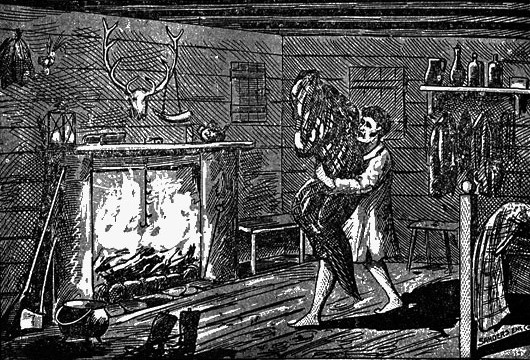
    A black and white woodcut illustration of a man and a spirit by a fireplace in a cabin, from the book Authenticated History of the Bell Witch
    An illustration of the Bell Witch story from M. V. Ingram's 1894 book.
    Credit: M. V. Ingram, Authenticated History of the Bell Witch (1894) · Licence: Public domain (published 1894) · Source

    The Bell Witch is a legend from northwest Robertson County, Tennessee. It says that from 1817 to 1821 the family of farmer John Bell Sr., near the present town of Adams, was attacked by a mostly invisible entity that could speak and affect objects around the farm.

    The main written source is Martin V. Ingram's 1894 Authenticated History of the Bell Witch. In it the spirit called itself “Kate” and focused on John Bell and his daughter Betsy. Some skeptics see Ingram's book as historical fiction or fraud, while others view it as a record of what people in the region believed in the 1800s. Some accounts say Andrew Jackson was intrigued by the story, but that detail is part of the legend.

    The Bell Witch Cave became a tourist attraction in the 20th century, and the story has inspired books, films and music. It is a legend: much-loved, widely told, and not independently documented.

    Sources: Wikipedia: Bell Witch

    Historical case. This is a summary written by the Department from the published sources listed above, in our own words. It is a historical case added to the map for context, not a reader submission. Reports are claims or findings as described in those sources; they are not proof of anything, and where an official or widely accepted explanation exists we say so. For entertainment and curiosity only. Spotted a mistake, or know more? Add a verification note below, or email paranormaldepartment1@gmail.com.

    📍 See this case on the map. Were you there, or can you explain it? Add a verification note below — notes are read by a person before they appear.

  • The Skunk Ape — Florida Everglades, FL (1818–present)

    The Skunk Ape — Florida Everglades, FL (1818–present)

    Cryptid Historical case When: Stories since the early 1800s; most common in the 1950s–70s  ·  Where: Southern Florida (Big Cypress / Everglades region)

    Status: Explained (probably) — most of the reports are judged to be hoaxes or misidentified wildlife, and the National Park Service calls it a hoax.

    About the pin: A regional legend; the pin is in the Big Cypress area, one of the most-cited areas.

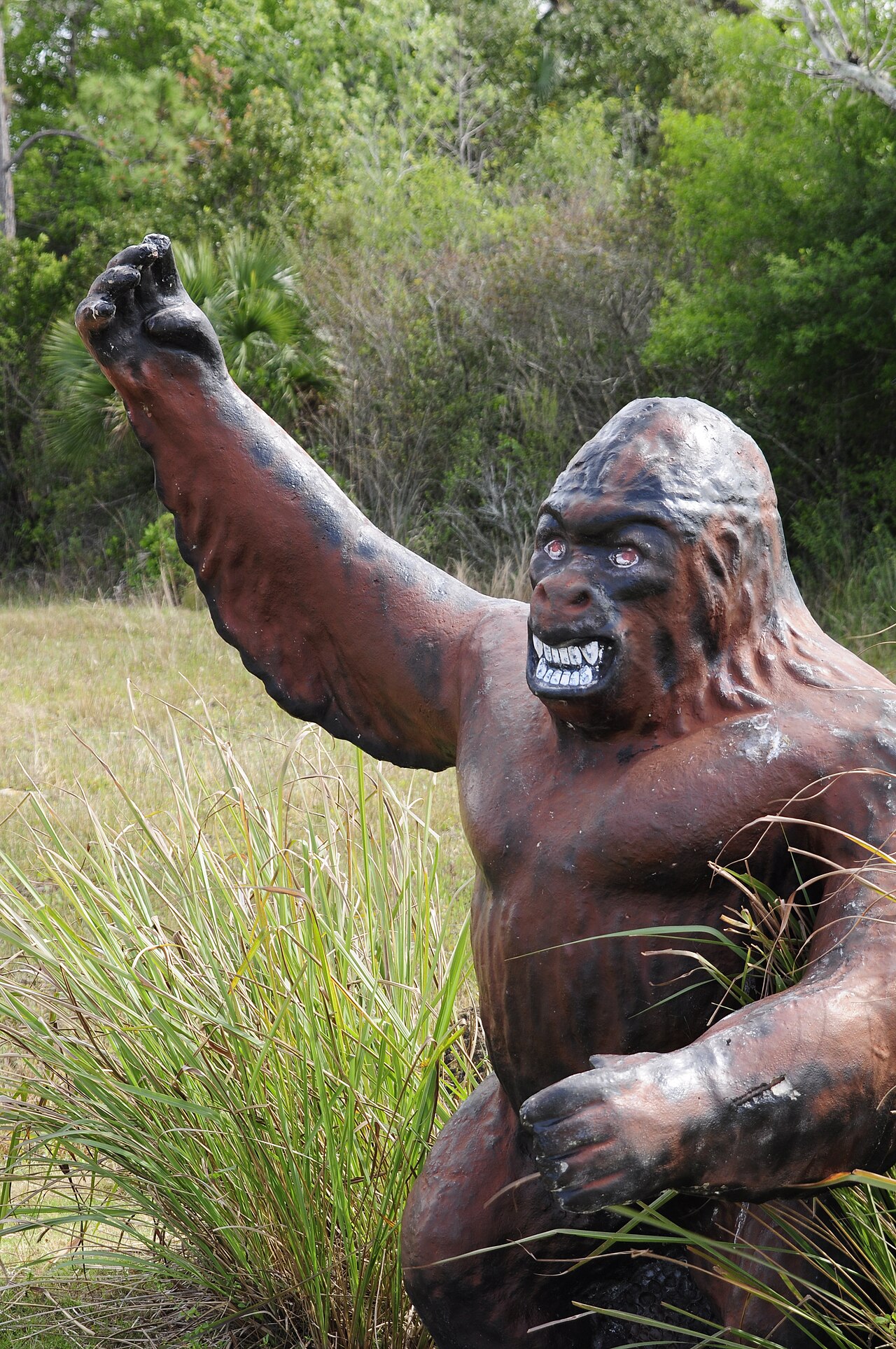
    A roadside statue of a hairy skunk ape raising an arm beside tall grass
    A roadside statue depicting the Florida skunk ape (not a photograph of an animal).
    Credit: MikesMegapixels / Wikimedia Commons (via Panoramio) · Licence: CC BY 3.0 · Source

    The skunk ape is a large, hairy, ape-like creature said to live in forests and swamps in the southeastern United States, most of all in Florida. It is called “skunk” for the foul smell that witnesses report.

    Accounts go back to the early 1800s: in 1818, local newspapers reported a story from what is now Apalachicola, Florida, about a “man-sized monkey” raiding food stores and stalking fishermen. Reports were most common from the 1950s through the 1970s, and hundreds have been logged since. In 1977 a bill was proposed in the Florida legislature to make it illegal to “take, possess, harm or molest anthropoids or humanoid animals”; it did not pass.

    Mainstream scientists consider the skunk ape folklore, misidentification and hoax. The skeptical investigator Joe Nickell suggests some sightings may be Florida black bears, possibly with mange. The National Park Service considers it a hoax.

    Sources: Wikipedia: Skunk ape

    Historical case. This is a summary written by the Department from the published sources listed above, in our own words. It is a historical case added to the map for context, not a reader submission. Reports are claims or findings as described in those sources; they are not proof of anything, and where an official or widely accepted explanation exists we say so. For entertainment and curiosity only. Spotted a mistake, or know more? Add a verification note below, or email paranormaldepartment1@gmail.com.

    📍 See this case on the map. Were you there, or can you explain it? Add a verification note below — notes are read by a person before they appear.
  • Eastern State Penitentiary — Philadelphia, PA (1829–1971)

    Eastern State Penitentiary — Philadelphia, PA (1829–1971)

    Ghost / Haunting Historical case When: Open 1829–1971; hauntings reported since closing  ·  Where: Philadelphia, Pennsylvania

    Status: Unverified — stories from visitors and staff; no evidence beyond personal accounts.

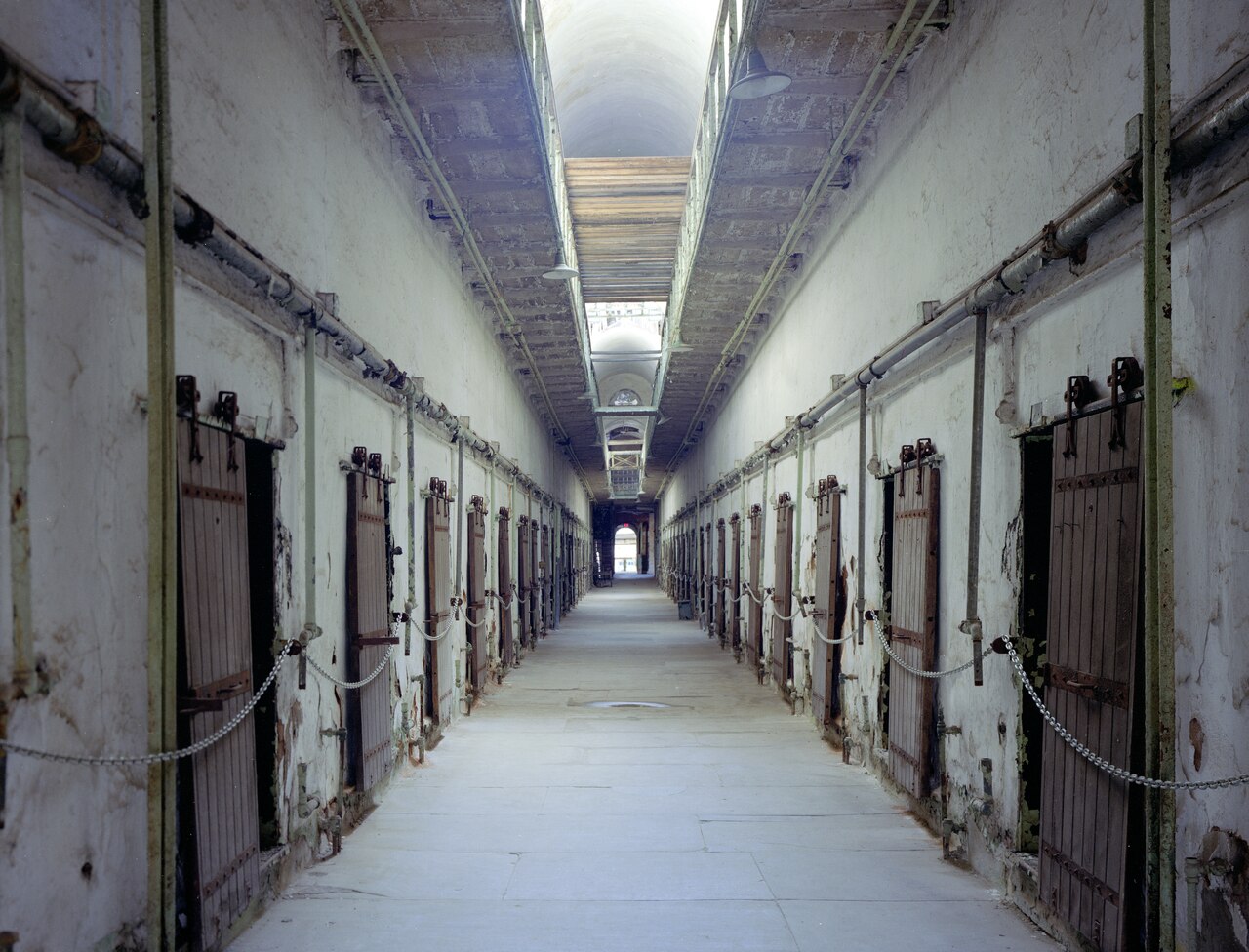
    A long vaulted cellblock corridor with cell doors on both sides at Eastern State Penitentiary
    A cellblock at Eastern State Penitentiary, Philadelphia.
    Credit: Carol M. Highsmith, Library of Congress (Highsmith Archive) · Licence: Public domain (no known copyright restrictions) · Source

    Eastern State Penitentiary opened on October 25, 1829. Designed by John Haviland, it is often called the world's first true penitentiary: a wheel of corridors where each prisoner lived in near-total isolation. It was the largest and most expensive public building in the United States when it was finished.

    Famous inmates included Al Capone, who served time in 1929, and bank robber Willie Sutton. The prison ended its isolation system in 1913, closed in 1970, and briefly held city inmates in 1971. Today it is a National Historic Landmark and a museum.

    Visitors and staff have long said they see shadowy figures, hear footsteps and whispers, or feel watched in the cellblocks, and the site has become a popular place for ghost hunters and Halloween events. These are personal reports, not recorded evidence.

    Sources: Wikipedia: Eastern State Penitentiary · Eastern State Penitentiary Historic Site

    Historical case. This is a summary written by the Department from the published sources listed above, in our own words. It is a historical case added to the map for context, not a reader submission. Reports are claims or findings as described in those sources; they are not proof of anything, and where an official or widely accepted explanation exists we say so. For entertainment and curiosity only. Spotted a mistake, or know more? Add a verification note below, or email paranormaldepartment1@gmail.com.

    📍 See this case on the map. Were you there, or can you explain it? Add a verification note below — notes are read by a person before they appear.

  • The White House — Washington, DC (1860s onward)

    The White House — Washington, DC (1860s onward)

    Ghost / Haunting Historical case When: Lincoln era, 1861–1865; ghost stories from the early 1900s on  ·  Where: Washington, D.C.

    Status: Unverified — stories passed down in memoirs and retellings; none has been documented by independent evidence.

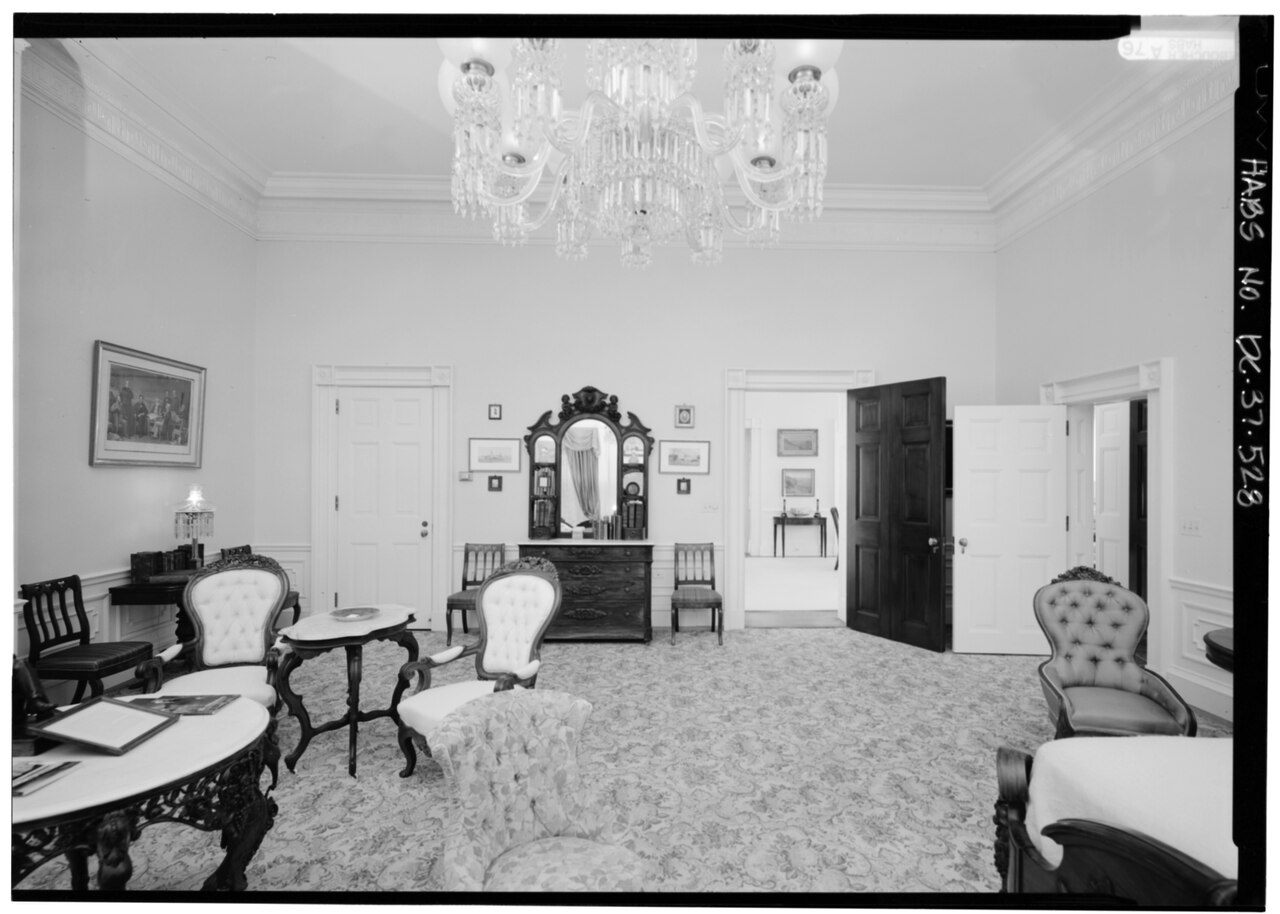
    A black and white photograph of the Lincoln Bedroom in the White House, with a large bed, chandelier and furniture
    The Lincoln Bedroom, White House (Historic American Buildings Survey photograph).
    Credit: Jack E. Boucher, Historic American Buildings Survey, Library of Congress · Licence: Public domain (U.S. government work) · Source

    The Lincoln Bedroom is part of a guest suite in the southeast corner of the White House's second floor. The rooms are named for President Abraham Lincoln, who used them as his office. During the Civil War his wife Mary Todd Lincoln, grieving the death of their son Willie, was reported to have held seances in the White House.

    Over the years, visitors and staff have told stories of seeing or sensing Lincoln in the house. Famous names are attached to these stories in popular accounts, including a queen of the Netherlands and a British prime minister, but the retellings vary and the original sources are hard to pin down.

    The White House Historical Association has plenty of history about the rooms. The ghost stories are an old Washington tradition, but they are tradition rather than evidence.

    Sources: Wikipedia: Lincoln Bedroom · White House Historical Association

    Historical case. This is a summary written by the Department from the published sources listed above, in our own words. It is a historical case added to the map for context, not a reader submission. Reports are claims or findings as described in those sources; they are not proof of anything, and where an official or widely accepted explanation exists we say so. For entertainment and curiosity only. Spotted a mistake, or know more? Add a verification note below, or email paranormaldepartment1@gmail.com.

    📍 See this case on the map. Were you there, or can you explain it? Add a verification note below — notes are read by a person before they appear.