Status: Explained (probably) — historians generally think a wolf or several wolves, or other known animals, were responsible, though debate continues.
About the pin: Pinned near Langogne, the area of the first attacks; the attacks covered a large region.

Credit: Unknown engraver (1764), French print · Licence: Public domain (18th-century work) · Source
Between 30 June 1764 and 19 June 1767 an animal or animals terrorised the former province of Gévaudan in the Margeride Mountains of south-central France. The number of victims depends on the source: a 1987 study estimated 210 attacks with 113 deaths and 49 injuries, while other sources say 60 to 100 adults and children were killed.
The first recorded attack was in early summer 1764, when a young woman tending cattle near Langogne saw a beast “like a wolf, yet not a wolf” and was saved by the bulls in her herd. The first official victim, 14-year-old Jeanne Boulet, was killed on 30 June near Les Hubacs. The attacks usually targeted lone people, often children and women, tending livestock.
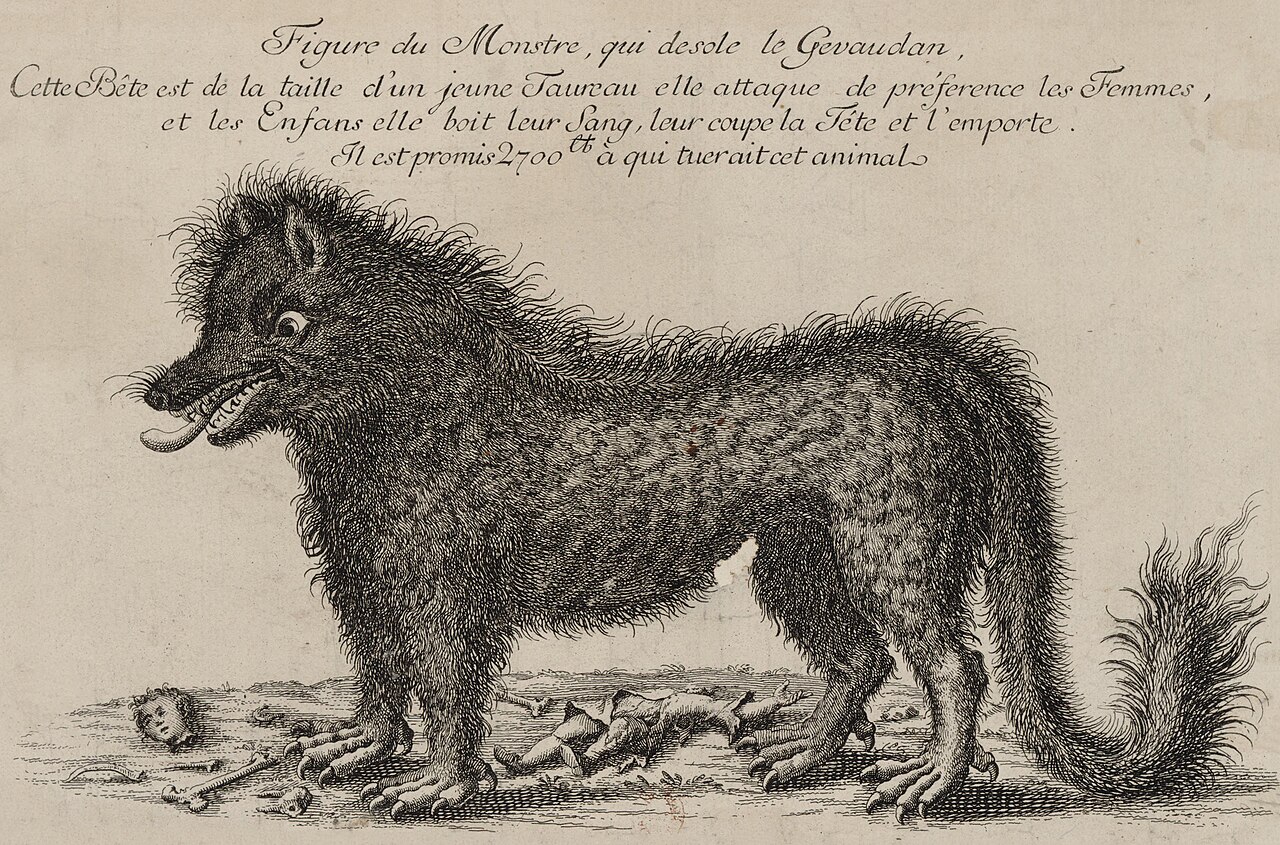
The story reached King Louis XV, who decreed that the French state would help find and kill the beast. Several animals were reported killed during the affair. Engravings of the time, like the one shown here, helped the legend spread across Europe, and it is still debated whether the attacker was a wolf or something else.
Sources: Wikipedia: Beast of Gévaudan
📍 See this case on the map. Were you there, or can you explain it? Add a verification note below — notes are read by a person before they appear.
Leave a Reply