Tag: Cryptid

  • The Wendigo — Northern Woods (Algonquian folklore)

    Cryptid Historical case When: Centuries-old tradition; no single date  ·  Where: Great Lakes and northern forests of the U.S. and Canada

    Status: Folklore — a spirit from Algonquian tradition, not a reported animal; the pin marks the region only.

    About the pin: Folklore region, not a place of any one sighting; pinned in the northern Minnesota woods.

    The wendigo is a mythological creature or evil spirit from Algonquian folklore of the northern woods of the United States and Canada. It is often described as a malevolent spirit, sometimes shown as a giant humanoid with a heart of ice, whose approach may be signalled by a foul smell or a sudden unseasonable cold.

    In the traditional stories it is tied to insatiable hunger, and to the dangers of starvation and cannibalism in long winters. It is used in horror fiction and social commentary today. In some First Nations communities, greed and destruction of the environment are described as symptoms of wendigo psychosis.

    This entry is on the map because people often ask about it, but it is unlike the others: it belongs to living Indigenous traditions and should be treated with respect, not as a monster to be hunted. “Wendigo psychosis” is also a disputed, culture-bound term used by psychiatrists in the past.

    Sources: Wikipedia: Wendigo · Encyclopædia Britannica: wendigo

    Historical case. This is a summary written by the Department from the published sources listed above, in our own words. It is a historical case added to the map for context, not a reader submission. Reports are claims or findings as described in those sources; they are not proof of anything, and where an official or widely accepted explanation exists we say so. For entertainment and curiosity only. Spotted a mistake, or know more? Add a verification note below, or email paranormaldepartment1@gmail.com.

    📍 See this case on the map. Were you there, or can you explain it? Add a verification note below — notes are read by a person before they appear.
  • The Jersey Devil — Pine Barrens, NJ (1735, 1909)

    The Jersey Devil — Pine Barrens, NJ (1735, 1909)

    Cryptid Historical case When: Legend dated 1735; major wave of reports January 16–23, 1909  ·  Where: Pine Barrens, southern New Jersey

    Status: Explained — folklore plus a 1909 newspaper-driven panic that researchers call mass hysteria.

    About the pin: The legend is tied to Leeds Point; reports covered all of South Jersey.

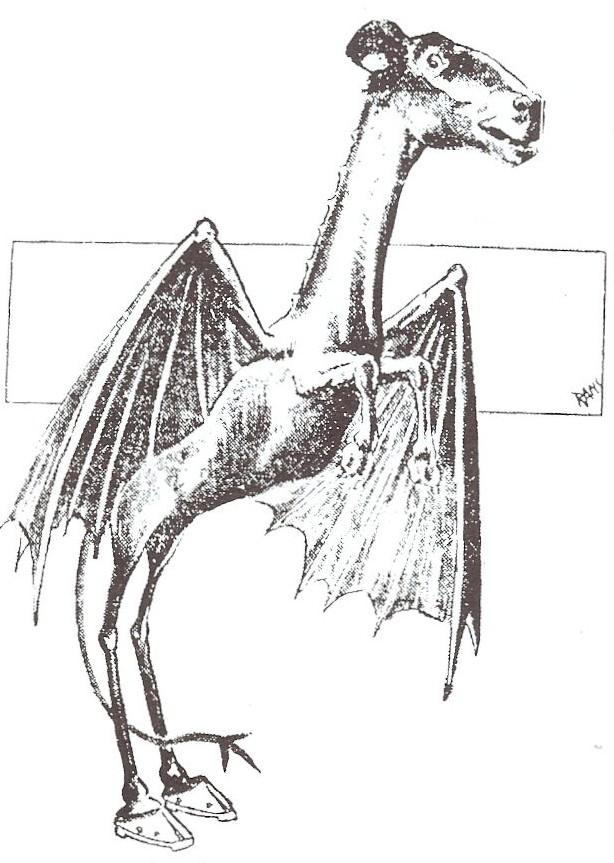
    A 1909 newspaper illustration of the Jersey Devil, a winged creature with a horse-like head
    Jersey Devil illustration from a Philadelphia newspaper, 1909.
    Credit: Unknown artist, Philadelphia newspaper (1909) · Licence: Public domain (published 1909) · Source

    The Jersey Devil, also called the Leeds Devil, is a legendary creature said to live in the New Jersey Pine Barrens. It is usually described as a flying biped with hooves, a horse- or goat-like head, bat-like wings and a forked tail.

    According to one version of the legend, in 1735 a woman named Leeds, already the mother of twelve children, cursed her thirteenth with the words “let the child be the devil.” The baby is said to have grown wings, claws and a tail, and flown up the chimney into the pines. Other versions put the story in other places and decades. The name “Jersey Devil” does not show up in print until the 20th century.

    The big flap came during the week of January 16–23, 1909, when newspapers published hundreds of claimed encounters across South Jersey and the Philadelphia area, including claims that it attacked a trolley car. The image of the batlike creature with a horse's head became standard from these stories. Researchers cite the 1909 panic as a classic example of mass hysteria spreading from a regional legend.

    Sources: Wikipedia: Jersey Devil

    Historical case. This is a summary written by the Department from the published sources listed above, in our own words. It is a historical case added to the map for context, not a reader submission. Reports are claims or findings as described in those sources; they are not proof of anything, and where an official or widely accepted explanation exists we say so. For entertainment and curiosity only. Spotted a mistake, or know more? Add a verification note below, or email paranormaldepartment1@gmail.com.

    📍 See this case on the map. Were you there, or can you explain it? Add a verification note below — notes are read by a person before they appear.
  • The Beast of Gévaudan — Lozère, France (1764–67)

    The Beast of Gévaudan — Lozère, France (1764–67)

    Cryptid Historical case When: June 30, 1764 to June 19, 1767  ·  Where: Gévaudan, south-central France

    Status: Explained (probably) — historians generally think a wolf or several wolves, or other known animals, were responsible, though debate continues.

    About the pin: Pinned near Langogne, the area of the first attacks; the attacks covered a large region.

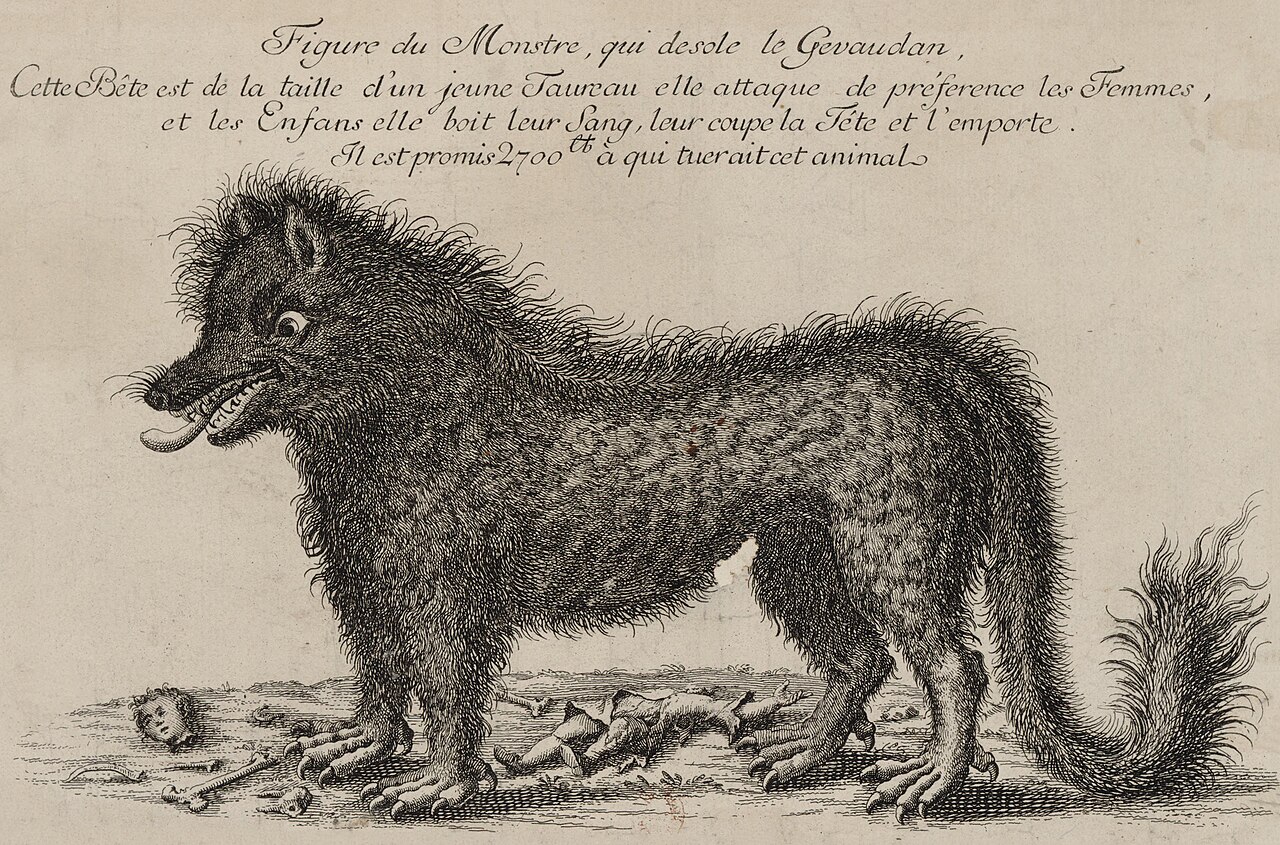
    An 18th-century engraving of the Beast of Gévaudan, a shaggy wolf-like animal with a long tail
    “Figure du Monstre qui désole le Gévaudan”, an engraving from 1764.
    Credit: Unknown engraver (1764), French print · Licence: Public domain (18th-century work) · Source

    Between 30 June 1764 and 19 June 1767 an animal or animals terrorised the former province of Gévaudan in the Margeride Mountains of south-central France. The number of victims depends on the source: a 1987 study estimated 210 attacks with 113 deaths and 49 injuries, while other sources say 60 to 100 adults and children were killed.

    The first recorded attack was in early summer 1764, when a young woman tending cattle near Langogne saw a beast “like a wolf, yet not a wolf” and was saved by the bulls in her herd. The first official victim, 14-year-old Jeanne Boulet, was killed on 30 June near Les Hubacs. The attacks usually targeted lone people, often children and women, tending livestock.

    The story reached King Louis XV, who decreed that the French state would help find and kill the beast. Several animals were reported killed during the affair. Engravings of the time, like the one shown here, helped the legend spread across Europe, and it is still debated whether the attacker was a wolf or something else.

    Sources: Wikipedia: Beast of Gévaudan

    Historical case. This is a summary written by the Department from the published sources listed above, in our own words. It is a historical case added to the map for context, not a reader submission. Reports are claims or findings as described in those sources; they are not proof of anything, and where an official or widely accepted explanation exists we say so. For entertainment and curiosity only. Spotted a mistake, or know more? Add a verification note below, or email paranormaldepartment1@gmail.com.

    📍 See this case on the map. Were you there, or can you explain it? Add a verification note below — notes are read by a person before they appear.

  • The Skunk Ape — Florida Everglades, FL (1818–present)

    The Skunk Ape — Florida Everglades, FL (1818–present)

    Cryptid Historical case When: Stories since the early 1800s; most common in the 1950s–70s  ·  Where: Southern Florida (Big Cypress / Everglades region)

    Status: Explained (probably) — most of the reports are judged to be hoaxes or misidentified wildlife, and the National Park Service calls it a hoax.

    About the pin: A regional legend; the pin is in the Big Cypress area, one of the most-cited areas.

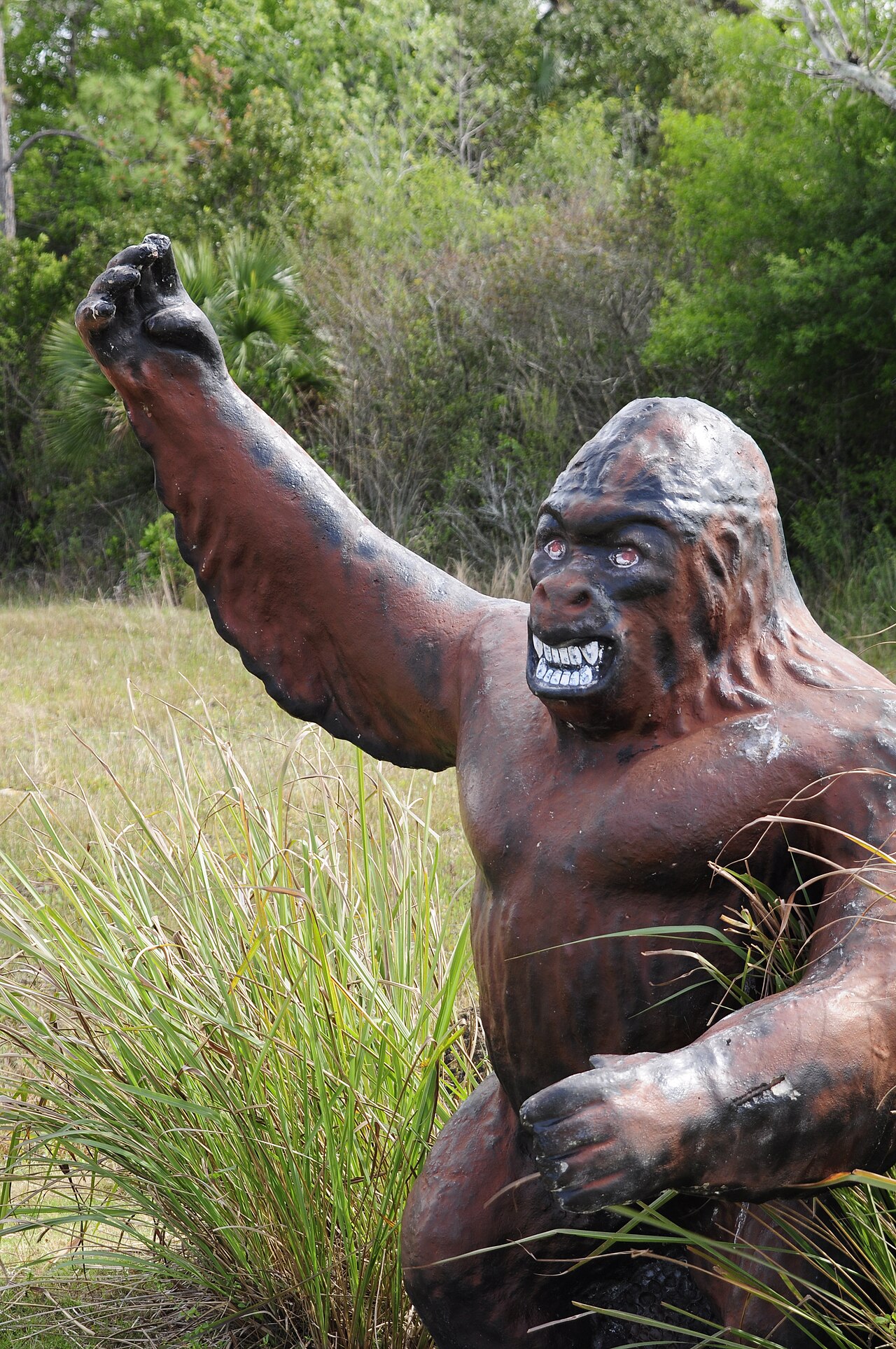
    A roadside statue of a hairy skunk ape raising an arm beside tall grass
    A roadside statue depicting the Florida skunk ape (not a photograph of an animal).
    Credit: MikesMegapixels / Wikimedia Commons (via Panoramio) · Licence: CC BY 3.0 · Source

    The skunk ape is a large, hairy, ape-like creature said to live in forests and swamps in the southeastern United States, most of all in Florida. It is called “skunk” for the foul smell that witnesses report.

    Accounts go back to the early 1800s: in 1818, local newspapers reported a story from what is now Apalachicola, Florida, about a “man-sized monkey” raiding food stores and stalking fishermen. Reports were most common from the 1950s through the 1970s, and hundreds have been logged since. In 1977 a bill was proposed in the Florida legislature to make it illegal to “take, possess, harm or molest anthropoids or humanoid animals”; it did not pass.

    Mainstream scientists consider the skunk ape folklore, misidentification and hoax. The skeptical investigator Joe Nickell suggests some sightings may be Florida black bears, possibly with mange. The National Park Service considers it a hoax.

    Sources: Wikipedia: Skunk ape

    Historical case. This is a summary written by the Department from the published sources listed above, in our own words. It is a historical case added to the map for context, not a reader submission. Reports are claims or findings as described in those sources; they are not proof of anything, and where an official or widely accepted explanation exists we say so. For entertainment and curiosity only. Spotted a mistake, or know more? Add a verification note below, or email paranormaldepartment1@gmail.com.

    📍 See this case on the map. Were you there, or can you explain it? Add a verification note below — notes are read by a person before they appear.
  • Ogopogo — Okanagan Lake, BC, Canada (1872–1968)

    Ogopogo — Okanagan Lake, BC, Canada (1872–1968)

    Cryptid Historical case When: First detailed settler report 1872; 1968 film  ·  Where: Okanagan Lake, British Columbia, Canada

    Status: Unverified — the legend developed from Indigenous water-spirit stories and later lake-monster lore; no body or clear evidence has been found.

    About the pin: The lake is about 84 miles long; pinned at Kelowna.

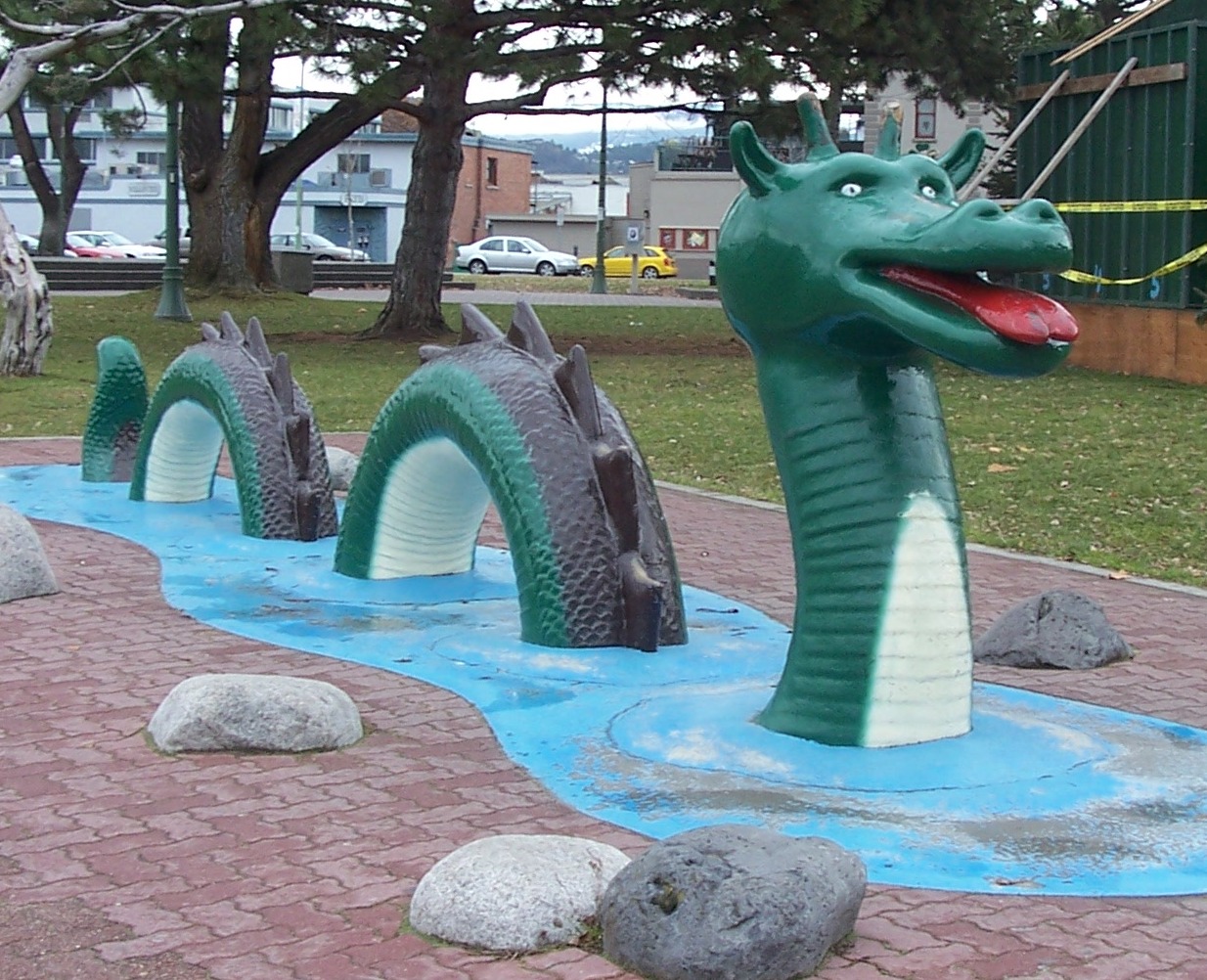
    A green sea-serpent statue with several humps beside a blue play pool in a Kelowna park
    An Ogopogo statue in a Kelowna, British Columbia park.
    Credit: Hamedog (English Wikipedia), cropped by Beyond My Ken / Wikimedia Commons · Licence: CC BY-SA 3.0 · Source

    Ogopogo is a lake monster said to live in Okanagan Lake in British Columbia, Canada. Some scholars trace its development from First Nations folklore and from widespread water-monster motifs, and today Ogopogo is part of the region's tourism and commercial branding.

    Susan Allison's 1872 report is considered the first detailed account from a white settler. According to the historian Mark Orkin, the creature got its colonial name on a night in 1924 when an English music-hall song was heard in Vernon, BC, although other sources suggest the name was in use earlier. In 1968, Art Folden filmed a large wake moving across the lake from Highway 97, and the footage has been analysed with computers.

    Ogopogo remains a legend and a symbol of the valley, with a statue in a Kelowna park. The film shows a wake, which can have natural causes, and no animal has been recovered.

    Sources: Wikipedia: Ogopogo

    Historical case. This is a summary written by the Department from the published sources listed above, in our own words. It is a historical case added to the map for context, not a reader submission. Reports are claims or findings as described in those sources; they are not proof of anything, and where an official or widely accepted explanation exists we say so. For entertainment and curiosity only. Spotted a mistake, or know more? Add a verification note below, or email paranormaldepartment1@gmail.com.

    📍 See this case on the map. Were you there, or can you explain it? Add a verification note below — notes are read by a person before they appear.

  • The Loveland Frog — Loveland, OH (1955, 1972)

    The Loveland Frog — Loveland, OH (1955, 1972)

    Cryptid Historical case When: Alleged 1955 sighting; police report March 3, 1972  ·  Where: Loveland, Ohio

    Status: Explained — the second officer who shot an animal two weeks after the 1972 report said it was a large iguana missing its tail.

    About the pin: Pinned in Loveland; the 1972 report was on a road by the Little Miami River.

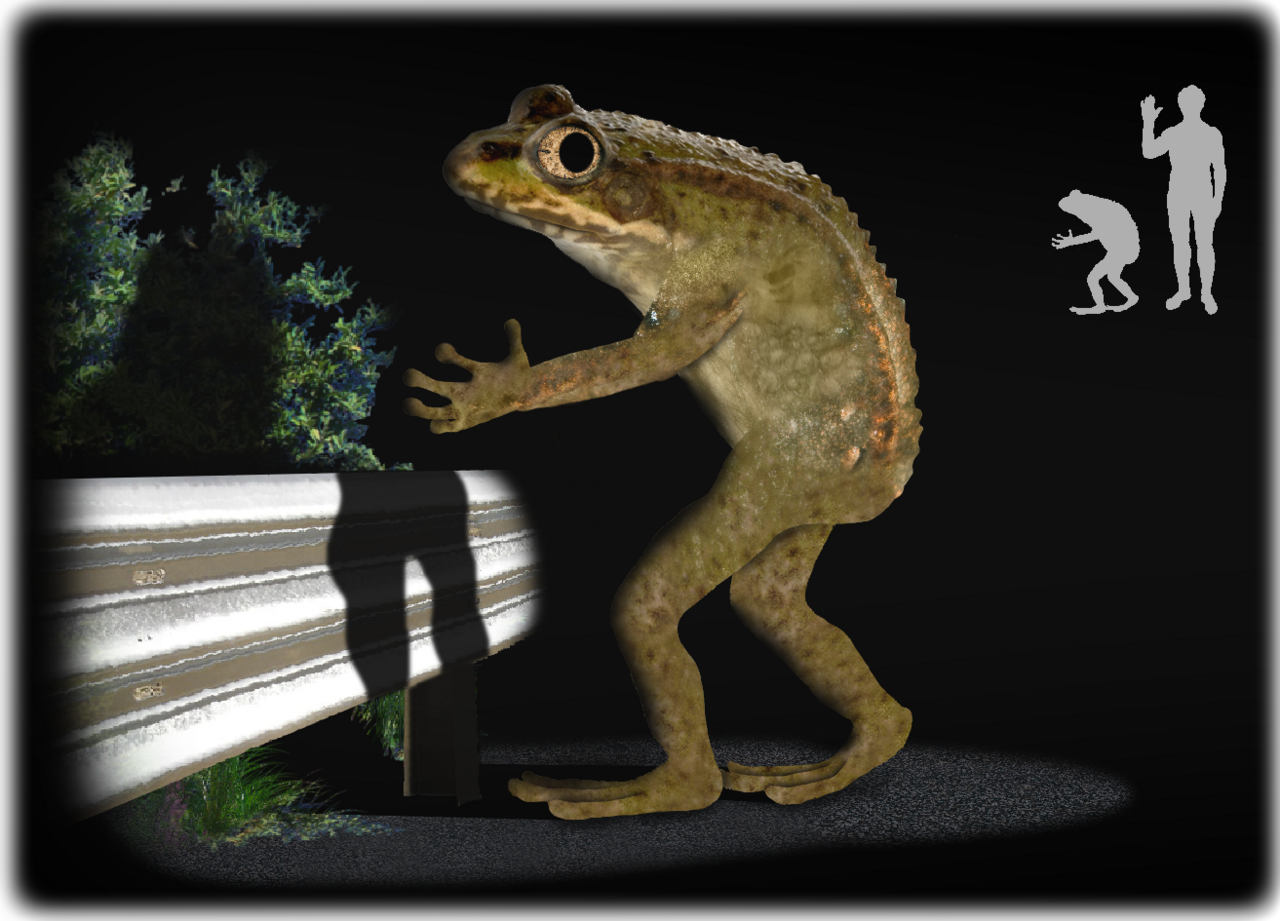
    An illustration of the Loveland frog as a large frog-like humanoid standing by a road barrier at night
    An artist's impression of the Loveland frog (not a photograph).
    Credit: Tim Bertelink / Wikimedia Commons · Licence: CC BY-SA 4.0 · Source

    The Loveland frog, or frogman, is a legendary humanoid creature reportedly seen in Loveland, Ohio. It is usually described as about four feet tall. The legend begins with a 1955 story about a businessman or salesman who saw three froglike figures standing along a road at night, with leathery skin; some versions add one holding a wand that threw sparks.

    At 1:00 a.m. on March 3, 1972, a Loveland police officer driving on Riverside Drive by the Little Miami River reported a leathery animal three to four feet long that “crouched like a frog” before it climbed over a guardrail toward the river.

    Two weeks later a second officer reported seeing a similar animal, shot it, and found that it was a large iguana, about three feet long, missing its tail. He said the first officer agreed it was what he had seen. The creature has since become a city mascot and has appeared in a musical and documentaries.

    Sources: Wikipedia: Loveland frog

    Historical case. This is a summary written by the Department from the published sources listed above, in our own words. It is a historical case added to the map for context, not a reader submission. Reports are claims or findings as described in those sources; they are not proof of anything, and where an official or widely accepted explanation exists we say so. For entertainment and curiosity only. Spotted a mistake, or know more? Add a verification note below, or email paranormaldepartment1@gmail.com.

    📍 See this case on the map. Were you there, or can you explain it? Add a verification note below — notes are read by a person before they appear.
  • Mothman — Point Pleasant, WV (1966–67)

    Mothman — Point Pleasant, WV (1966–67)

    Cryptid Historical case When: November 15, 1966 to December 15, 1967  ·  Where: Point Pleasant, West Virginia

    Status: Explained (probably) — a wildlife biologist at the time suggested a sandhill crane, and others suggest owls; the link to the bridge collapse is a later legend.

    About the pin: Pinned in Point Pleasant; the first sightings were at a former munitions site just outside town.

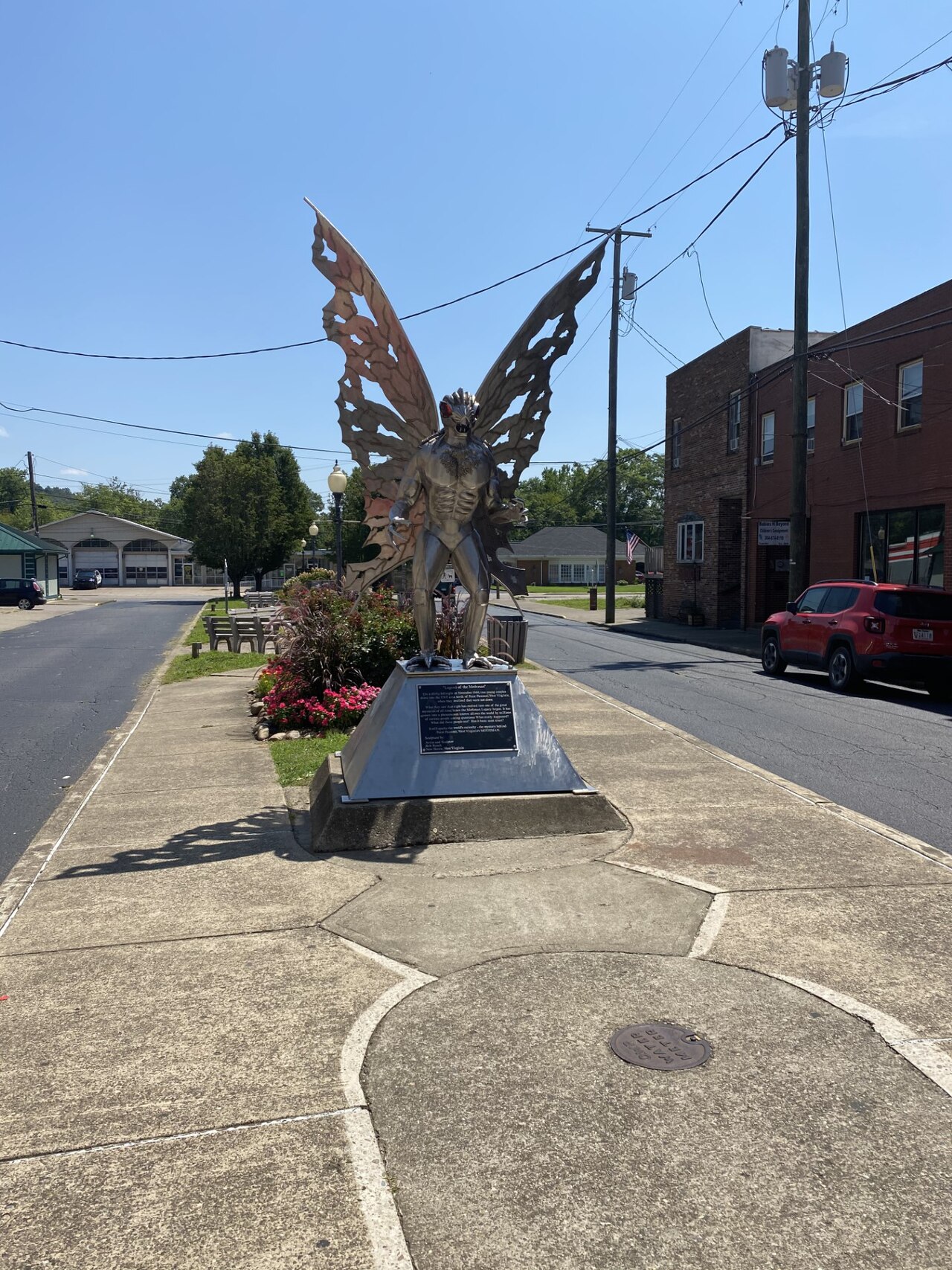
    The shiny metal Mothman statue on a street in Point Pleasant, West Virginia
    The Mothman statue in Point Pleasant, West Virginia.
    Credit: Csassen13 / Wikimedia Commons · Licence: CC0 (public-domain dedication) · Source

    On November 15, 1966, two young couples from Point Pleasant, Roger and Linda Scarberry and Steve and Mary Mallette, told police they had seen a large dark creature with glowing red eyes near “the TNT area,” a former munitions plant. The Point Pleasant Register ran the first story on November 16, and the national press soon picked it up. Over the following year there were many more reports.

    A wildlife biologist at West Virginia University told reporters that the descriptions fit a sandhill crane, which stands nearly as tall as a person, has a wingspan of about seven feet and has reddish skin around its eyes. Other explanations include herons and barred owls.

    On December 15, 1967, the Silver Bridge between Point Pleasant and Ohio collapsed in rush hour, killing 46 people. Investigators traced the failure to a single cracked eyebar. The idea that Mothman was connected came later, in John Keel's 1975 book The Mothman Prophecies and the 2002 film. Point Pleasant now has a Mothman statue and a festival.

    Sources: Wikipedia: Mothman · Wikipedia: Silver Bridge

    Historical case. This is a summary written by the Department from the published sources listed above, in our own words. It is a historical case added to the map for context, not a reader submission. Reports are claims or findings as described in those sources; they are not proof of anything, and where an official or widely accepted explanation exists we say so. For entertainment and curiosity only. Spotted a mistake, or know more? Add a verification note below, or email paranormaldepartment1@gmail.com.

    📍 See this case on the map. Were you there, or can you explain it? Add a verification note below — notes are read by a person before they appear.

  • Bigfoot — Bluff Creek, CA (1967)

    Bigfoot — Bluff Creek, CA (1967)

    Cryptid Historical case When: October 20, 1967 (as stated by the filmmakers)  ·  Where: Bluff Creek area, Six Rivers National Forest, Northern California

    Status: Unverified — the film has been studied and attacked for more than 50 years without a final answer; the filmmaker Roger Patterson maintained until his death that it was real.

    About the pin: Pinned on Bluff Creek; the exact filming spot is disputed.

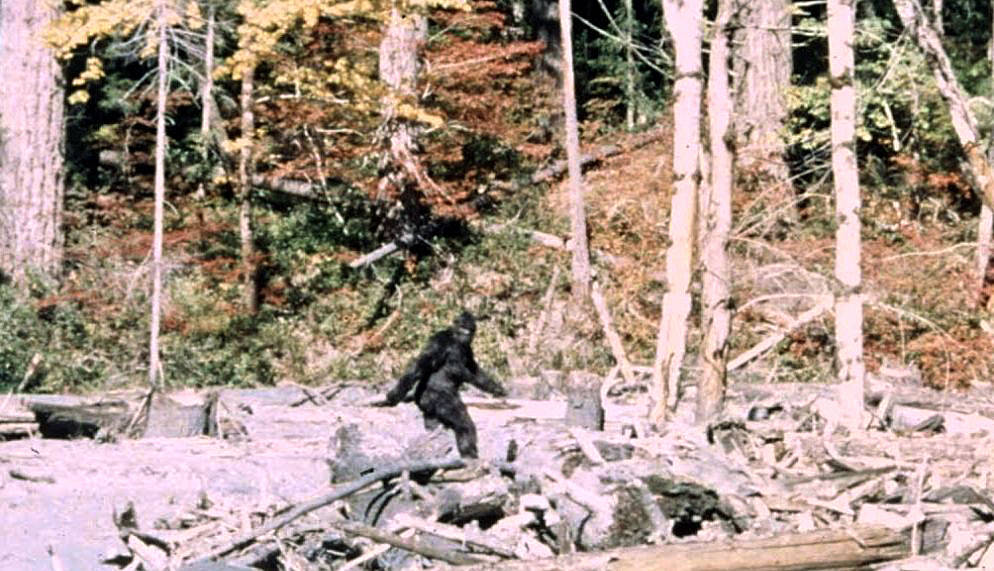
    A frame from the Patterson-Gimlin film showing a dark furry figure walking across a gravel clearing with trees behind
    Frame 352 from the 1967 Patterson–Gimlin film.
    Credit: Roger Patterson and Robert Gimlin (1967) · Licence: Public domain (published in 1967 without a copyright notice, per Wikipedia and Wikimedia Commons) · Source

    The Patterson–Gimlin film is a short motion picture made in 1967 in Northern California by Roger Patterson and Robert Gimlin. It shows an unidentified figure walking across a clearing and glancing at the camera, which the filmmakers said was a Bigfoot. The filmmakers gave October 20, 1967 as the date.

    The footage is 954 frames long and runs for about 59.5 seconds at 16 frames per second. Patterson died in 1972 and maintained until the end that the creature was real. Gimlin has always denied being part of any hoax. Critics say the figure is a person in a costume, while supporters point to its proportions and movement. Decades of attempts to authenticate or debunk the film have not produced agreement.

    The film was published in 1967 without a copyright notice and is in the public domain in the United States, which is why a frame can be shown here.

    Sources: Wikipedia: Patterson–Gimlin film

    Historical case. This is a summary written by the Department from the published sources listed above, in our own words. It is a historical case added to the map for context, not a reader submission. Reports are claims or findings as described in those sources; they are not proof of anything, and where an official or widely accepted explanation exists we say so. For entertainment and curiosity only. Spotted a mistake, or know more? Add a verification note below, or email paranormaldepartment1@gmail.com.

    📍 See this case on the map. Were you there, or can you explain it? Add a verification note below — notes are read by a person before they appear.
  • Champ — Lake Champlain, VT/NY (1977)

    Cryptid Historical case When: Photograph: 1977; older stories of various ages  ·  Where: Lake Champlain, Vermont and New York

    Status: Unverified — the famous 1977 photo cannot be checked because the negative is gone and the location is unknown.

    About the pin: The lake is more than 100 miles long; the pin is in the middle of it.

    Champ is the name given to a lake monster said to live in Lake Champlain, which lies between Vermont, New York and Quebec. The lake's namesake, Samuel de Champlain, is often said to have been the first European to see it in 1609, but the earliest source for that claim is a 1970 magazine issue, and there is no evidence Champlain ever said it.

    The best-known evidence is a photograph taken in 1977 by Sandra Mansi while on vacation with her family, which appears to show an animal with a long neck rising from the water. A scientist who examined the case found that the two most important pieces were missing: the negative had been thrown away and the exact spot could not be found. The bay is said to be no deeper than 14 feet, which a skeptic notes makes a giant hidden animal unlikely, and some have suggested the object is a floating tree trunk.

    Sightings continue, and Champ is a beloved local mascot. The photograph is not shown here because it is not clearly free to reuse.

    Sources: Wikipedia: Champ (folklore)

    Historical case. This is a summary written by the Department from the published sources listed above, in our own words. It is a historical case added to the map for context, not a reader submission. Reports are claims or findings as described in those sources; they are not proof of anything, and where an official or widely accepted explanation exists we say so. For entertainment and curiosity only. Spotted a mistake, or know more? Add a verification note below, or email paranormaldepartment1@gmail.com.

    📍 See this case on the map. Were you there, or can you explain it? Add a verification note below — notes are read by a person before they appear.

  • The Dover Demon — Dover, MA (1977)

    The Dover Demon — Dover, MA (1977)

    Cryptid Historical case When: April 21–22, 1977  ·  Where: Dover, Massachusetts

    Status: Unverified — police at the time suggested a school-vacation hoax; skeptics suggest a misidentified animal such as a foal or a snowy owl.

    About the pin: Pinned in the middle of Dover; reports were along roads about two miles apart.

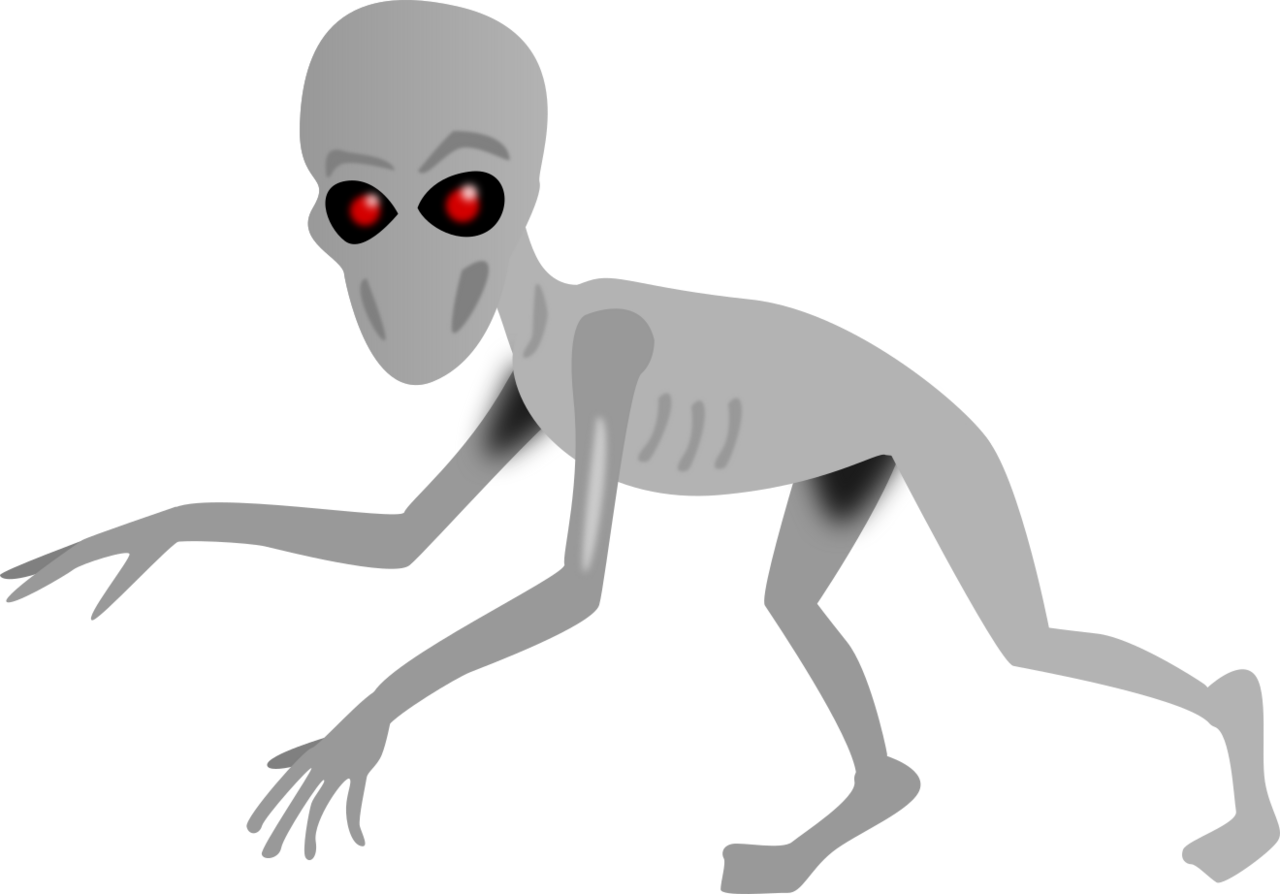
    A stylised drawing of the Dover Demon, a grey spindly creature with a large head and glowing red eyes
    An artist's impression of the Dover Demon (not a photograph).
    Credit: “Di (they-them)” / Wikimedia Commons · Licence: CC BY-SA 4.0 · Source

    On April 21, 1977, a 17-year-old driving on Farm Street in Dover, Massachusetts, reported seeing a figure about four feet tall perched on a broken stone wall. It had a watermelon-shaped head, glowing orange eyes and no visible nose or mouth. That same evening a 15-year-old reported something similar on Miller Hill Road, and the next night another 15-year-old reported an encounter on Springdale Avenue.

    Each of the three teenagers drew a sketch, and a local news report noted that the three locations, when plotted, formed a straight line more than two miles long. The sightings became public in May. Police told the Associated Press that the descriptions were probably a school-vacation hoax.

    Skeptics have suggested a foal, a moose calf or a snowy owl, and others point to 1977's science-fiction films. The skeptic Brian Dunning argues none of these explains four independent sightings in 24 hours, and the answer is still open.

    Sources: Wikipedia: Dover Demon

    Historical case. This is a summary written by the Department from the published sources listed above, in our own words. It is a historical case added to the map for context, not a reader submission. Reports are claims or findings as described in those sources; they are not proof of anything, and where an official or widely accepted explanation exists we say so. For entertainment and curiosity only. Spotted a mistake, or know more? Add a verification note below, or email paranormaldepartment1@gmail.com.

    📍 See this case on the map. Were you there, or can you explain it? Add a verification note below — notes are read by a person before they appear.