
Cold spots are one of the most famous ghost-hunting clues: a patch of air that is suddenly, noticeably chillier than the room around it. They’re also one of the easiest things to measure — which makes them a great place to start. Here are the basics of hunting cold spots with EMF, thermal and temperature readings, and how to stay honest about what you find.
Step 1: Take a baseline first
Before you can call anything unusual, you need to know what “normal” looks like in that room. Set your gear down, stand still, and record the starting temperature, humidity and EMF for a minute or two. Every change you see later is measured against that baseline. If you move to a new room, take a new baseline.
Step 2: Know your three tools
Air temperature
A temperature sensor tells you how warm the air is at the sensor. Watch for a quick drop of several degrees. Slow drifts over many minutes are usually just the house, the weather or the heating cycling on and off.
Thermal camera
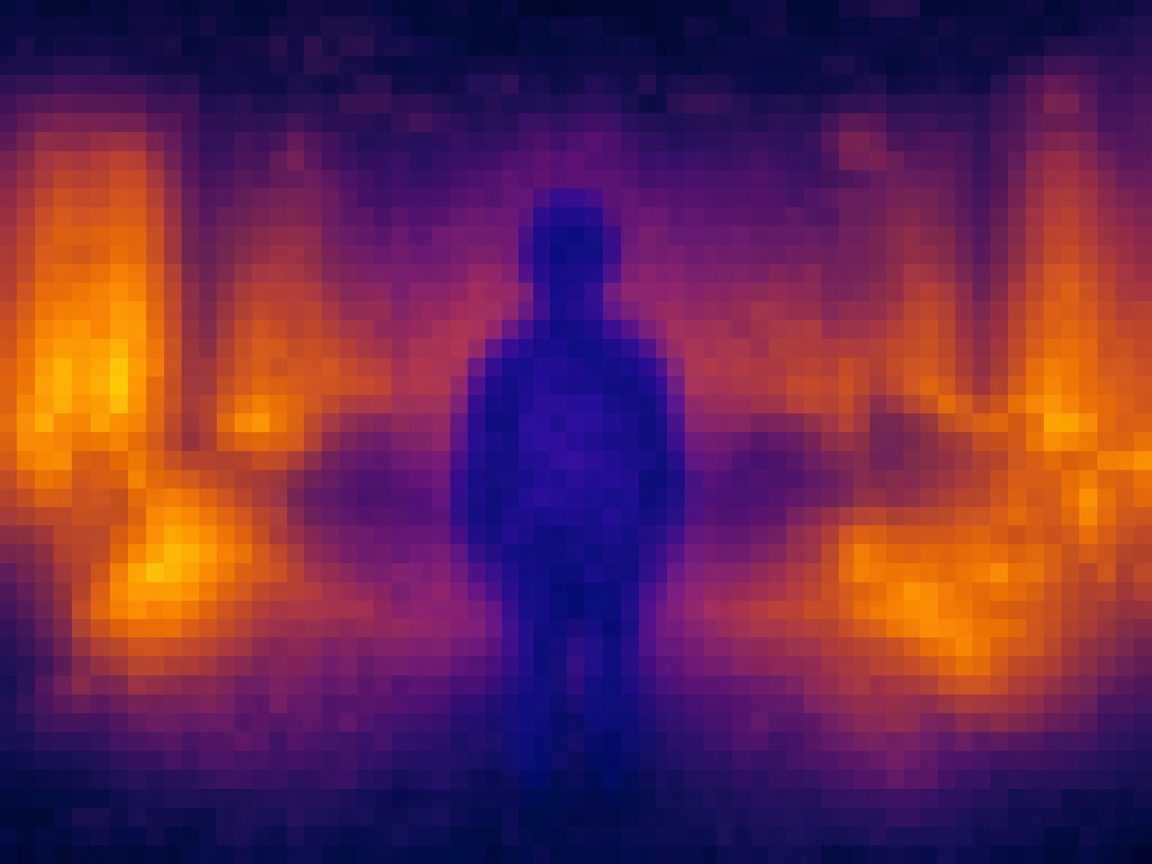
A thermal camera shows surface temperatures as colors, so you can see cool and warm areas instead of guessing. Even a tiny 8×8 thermal sensor will show people, pets, lamps, vents and cold windows clearly. Sweep slowly and watch the coldest spot in view — a sudden drop of a few degrees there is worth marking.
EMF (magnetic field)
An EMF or magnetometer sensor measures the magnetic field around it. Wiring, appliances, phones, speakers, magnets and even metal furniture change it. That’s why EMF alone is a noisy clue — but when EMF and temperature change together, it’s much more interesting.
Step 3: Look for two things at once
One sensor misbehaving is almost always boring. Real “huh?” moments are when two or more different readings change at the same time — say, a sudden cold drop plus a jump in EMF. This idea, called correlation, is the core of how our SCR-Lite recorder decides when to auto-mark a moment.
Step 4: Hunt the boring explanations first
Almost every cold spot has a normal cause. Before getting excited, check:
- Open or leaky doors and windows, fireplaces and chimneys
- Air-conditioning or heating vents, ducts and fans
- Cold glass, outside walls, basements and crawlspaces
- You — your own body heat and movement change what the sensors see
- Pets, other people, phones, lamps and electronics
- Turning your device toward a cooler surface, or moving it at all
Step 5: Mark it, repeat it, record it
When something happens, note the exact time and what the readings were. Then try to repeat it: set the device down, leave it alone, and see whether the cold spot returns. If you film, say “mark” out loud when you note a moment so you can line it up with your video later. A spot that can be repeated is a mystery; one that vanishes the moment you close a door is a draft.
Quick checklist
- Take a baseline in each new room.
- Hold still and sweep slowly.
- Watch for two sensors changing together.
- Rule out drafts, vents, windows and people.
- Mark the time, repeat the test, keep your notes.
Reminder: this is a hobby for fun. Temperature, thermal and EMF readings can’t prove anything paranormal — but they can make a night in a dark old house a lot more interesting. Stay safe and never trespass.